

The short version
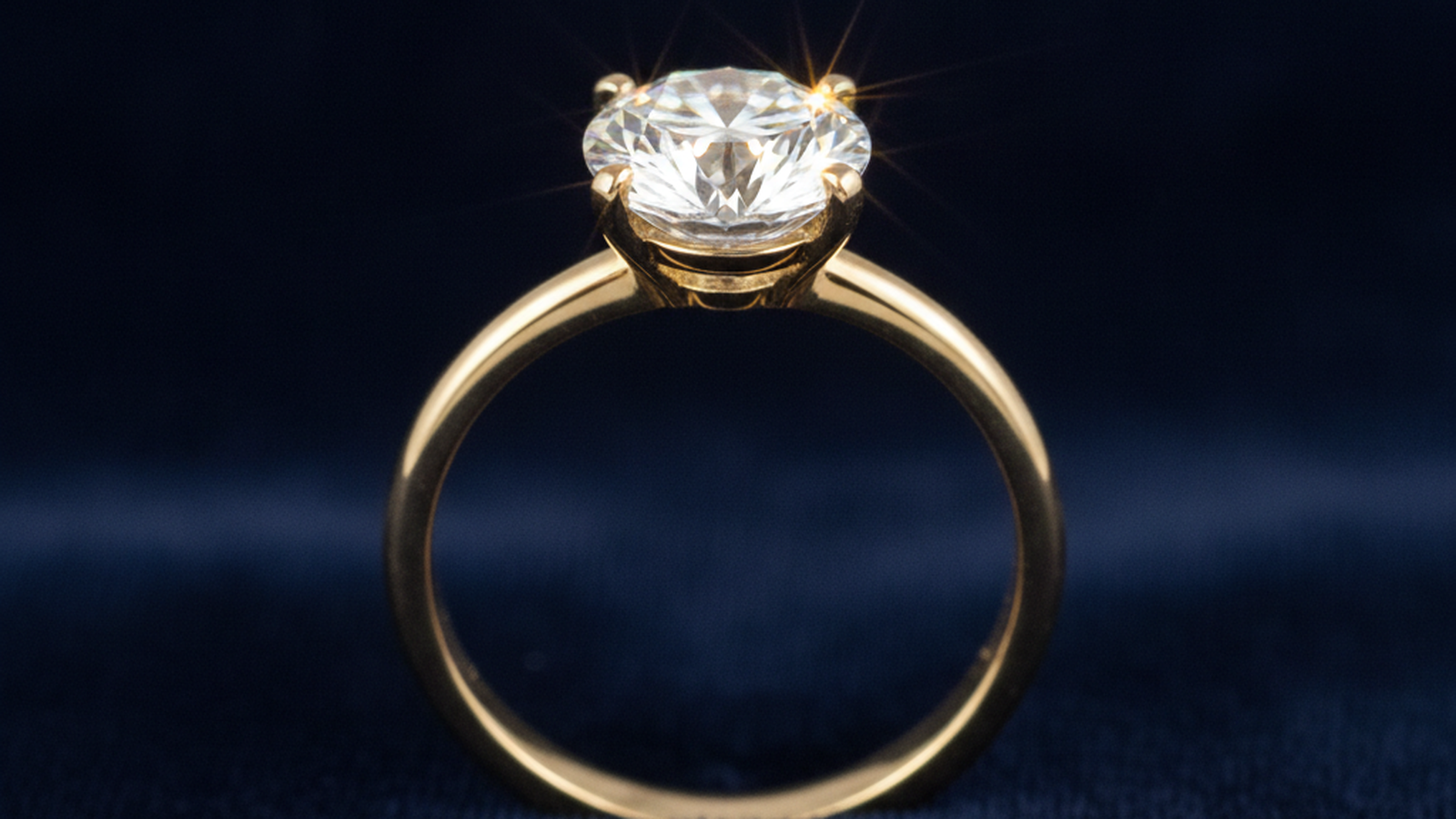
Yes. A standard Homeowners Policy does cover jewelry - your engagement ring, your watch, your grandmother's pearls are all treated as personal property, and they are protected under the same policy that protects your furniture and your clothes. If your home catches fire and a ring on the dresser is destroyed, that is a covered loss up to your contents limit. So far, so good.
Here is the part that surprises people: coverage for the theft of jewelry is capped at a much lower number than the rest of your belongings. On most standard policies that special theft limit is low - generally $1,000 to $2,000 for all of your jewelry combined (about $1,500 is the figure most often cited, with some policies running up toward $2,500). That is not a per-item cap you only reach with a Rolex; it is the total the policy will pay if jewelry is stolen, period. A single modern engagement ring can blow past it in one theft.
This is educational information about how Homeowners Insurance generally works, not personalized insurance advice, and every policy is worded a little differently. For the exact limits and options on your own coverage, read your declarations page or talk with a licensed agent.
"Covered" and "covered enough" are two different things
The confusion here comes from one word doing two jobs. When someone asks whether Homeowners Insurance covers jewelry, the honest answer is yes, but - and the "but" is where families get caught after a loss.
Your Homeowners Policy protects personal property against a list of named perils: fire, windstorm, a burst pipe, vandalism, and so on. Jewelry is personal property, so for most of those perils it is covered like everything else you own, up to your overall contents limit (often set as a percentage of your dwelling coverage). The gap is not in whether jewelry is covered - it is in how much the policy will pay for the one peril jewelry is most exposed to: theft.
Insurers single out a handful of easily-stolen, high-value categories - jewelry, watches, furs, and sometimes cash, firearms, and silverware - and apply a special dollar sub-limit to theft of those items. It is a normal, expected feature of a standard policy, not a trick. But it means the coverage you assume you have and the coverage you actually have can be very different numbers.
What the jewelry theft sub-limit actually looks like
Consumer guidance from authorities like the Insurance Information Institute and the NAIC describes the standard setup this way: a typical Homeowners Policy limits what it will pay for stolen jewelry to a relatively small amount. In practice that number generally lands somewhere in the $1,000 to $2,000 range for all jewelry combined, with around $1,500 the most commonly cited standard and some policies a bit higher. Treat the exact figure here as a general paraphrase of how these policies tend to be written - your own limit is printed on your policy.
Two things about that cap trip people up:
- It is a total, not a per-item allowance. The limit applies to all your jewelry as a group. One stolen ring can absorb the entire amount.
- It applies to theft specifically. Damage or loss of jewelry from a covered peril like a fire is handled under your regular contents limit; it is the theft category that carries the low special cap.
There is usually your policy deductible to reckon with, too. If your jewelry theft limit is $1,500 and your deductible is $1,000, the most the policy would actually put back in your pocket after a theft is the difference - which is why, for anything beyond a modest piece, the standard cap rarely covers a real-world loss.
Renters and condo policies work the same way
If you rent rather than own, do not assume this is somebody else's problem. A Renters Policy and a condo owner's policy both include personal property coverage, and they carry the same kind of low special sub-limit on theft of jewelry that a Homeowners Policy does - commonly in that same $1,000 to $2,000 range. The engagement ring in a Charlotte apartment is exposed to exactly the gap described above. The good news is that the fixes are identical: you can raise the special limit or schedule the pieces on a floater added to your renters or condo coverage, or buy a standalone jewelry policy. None of it requires owning a home.
Two ways to close the gap
If your jewelry is worth more than the standard theft cap - and for most engagement rings and nicer watches, it is - you have two clean options. A good independent agent will lay both in front of you rather than pushing one.
Option 1: Raise the limit on your Homeowners Policy
The simpler and usually cheaper move is to increase the special theft limit for jewelry on your existing policy. This buys more room without adding a separate schedule of items. The catch is that a raised blanket limit still comes with internal caps - in one Insurance Information Institute example, a raised limit might cover roughly $2,000 per item and $5,000 overall. That is better than the base cap, but it is still a ceiling, it still carries your deductible, and it still only broadens the theft coverage - not the range of things that can go wrong.
Option 2: Schedule the jewelry on a floater
The broader move is to schedule your valuable pieces individually - also called adding a personal articles floater or endorsement. You list each item (usually with an appraisal or receipt), assign it a value, and that item gets its own dedicated coverage sitting on top of your Homeowners Policy. Scheduling is the option that actually changes what is covered, not just how much. We break down exactly how it works in our guide to the scheduled personal property floater.
What scheduling actually adds
Scheduling is not just a bigger number - it is a better kind of coverage. Here is what changes when a ring goes from "buried in your contents limit" to "scheduled":
- All-risk protection. A floater covers losses of virtually any type, including accidental ones - not just the named perils on the base policy.
- "Mysterious disappearance" is covered. This is the big one. If your ring slips off and vanishes down a drain, or simply goes missing with no break-in and no explanation, a base Homeowners Policy generally will not pay - but a floater is built to. For jewelry, which gets lost far more often than it gets stolen, this is often the coverage that matters most.
- Typically no deductible. Scheduled items usually carry no deductible, so a covered loss is paid from the first dollar up to the scheduled amount.
- The value is agreed and documented. Because you scheduled it with an appraisal, there is no argument about what the piece was worth after it is gone. The insurer may also choose to replace the item with one of like kind and quality rather than cut a check.
That combination - all-risk, mysterious disappearance, no deductible - is why scheduling is generally considered the strongest way to protect valuable jewelry. It closes exactly the holes the base policy leaves open.
On or off your property, at home or traveling
One more limitation of leaning on the base policy: your Homeowners Policy is built around your home. Scheduling a valuable piece can extend its protection with you - coverage on a floater can follow the item worldwide and off-premises, so the ring is covered on vacation, at the gym, or on a trip to see family, not just sitting at the house. For jewelry you actually wear out into the world, that portability is a meaningful upgrade over relying on the contents section of a home policy.
The other route: a standalone jewelry policy
Scheduling on your Homeowners Policy is not the only path. You can also buy a standalone jewelry policy from a specialist insurer - Jewelers Mutual is one well-known example - that exists only to cover jewelry. A standalone policy is typically written on an "all perils" basis, meaning all loss, theft, damage, or disappearance is covered unless the policy specifically excludes it, and these policies often let you choose your deductible, including a $0 option. Which route is better depends on your situation, and it is the main question we work through in our companion guide on how to insure your jewelry the right way. If the piece in question is an engagement ring, our guide to engagement ring insurance digs into that specific case.
A clearly-labeled example
The following is a made-up illustration to show how the pieces fit together - not a quote, not a real policy, and not a promise of any outcome.
Picture a couple in the Ballantyne area of Charlotte. Between an engagement ring, a wedding band, and a nice watch, they have around $12,000 of jewelry. Their Homeowners Policy has a jewelry theft sub-limit of $1,500 and a $1,000 deductible. One afternoon there is a break-in and the jewelry is taken.
Under the base policy alone, the most they could collect for the stolen jewelry is the $1,500 theft cap, less their deductible - a small fraction of the $12,000 loss. Now run the same story if they had scheduled those three pieces on a floater: each item is covered for its appraised value with no deductible, and even the ring that had earlier slipped down a sink drain (a "mysterious disappearance" the base policy would not touch) would have been covered. Same family, same jewelry - the difference in what they recover comes down entirely to whether the coverage was set up before the loss. That is the whole reason to ask this question early.
Before a loss: know your number and document your pieces
Whatever you decide, two habits make everything easier if the worst happens. First, know your actual limit - the special theft sub-limit is printed on your Homeowners Policy declarations, and reading it is a five-minute exercise that tells you exactly how exposed you are today. Second, document what you own before you ever file a claim. A current appraisal or a detailed receipt is what an insurer uses to set a scheduled value when you apply, and it is typically required at claim time to prove what a piece was and what it was worth. Keep appraisals, gemstone certificates, and clear photos with your records, and refresh valuations over time, since jewelry and precious-metal values move. Coverage and documentation work together: the coverage pays, and the paperwork proves.
What this means for a North Carolina household
None of this is unique to North Carolina - the sub-limit structure is standard across the country - but a few local realities are worth keeping in mind. Charlotte and the greater Mecklenburg County area, like any metro, see their share of home break-ins, and theft is exactly the peril the standard cap handles poorly. If you are in the greater Nashville, Tennessee area, the same policy mechanics apply. Wherever you are, the practical steps are the same:
- Find your actual limit. Pull out your Homeowners Policy declarations and look for the special limit on theft of jewelry. Now you know your real starting point.
- Get your better pieces appraised. A current appraisal (or a detailed receipt) is what lets you schedule an item and what settles the value at claim time.
- Decide: raise the limit, schedule, or go standalone. Match the fix to what you own and how you would feel losing it.
Because jewelry often sits inside a bigger picture - a higher-value home, multiple cars, other collections - it is worth seeing how all the pieces fit under one roof. Our overview of insuring the whole affluent household shows how scheduled valuables coordinate with the rest of your coverage. And for the fundamentals of what your base policy does and does not do, our guide to what homeowners insurance covers is a good companion.
How The Jordan Insurance Agency helps
The Jordan Insurance Agency is an independent insurance agency based in Charlotte, North Carolina, serving households across the state and into the greater Nashville, Tennessee area. Because we are independent, we are not tied to a single company - we shop multiple carriers on your behalf, compare how each one handles jewelry, and show you the trade-offs in plain English before anything is signed. That work costs you nothing; we are paid by the carrier you choose, not by you.
For your jewelry specifically, we will help you read your current theft sub-limit, weigh whether raising the limit is enough or whether scheduling (or a standalone policy) is the smarter fit, and make sure the coverage actually matches what you own. We will be just as honest when the base policy is fine as when it is not. When you want a second set of eyes on it, reach out - and if you want to know what to look for in an advisor for valuable coverage, our guide on choosing an agent for high-value coverage lays it out. No pressure, no jargon, and no cost to have the conversation.

.svg)
.svg)