

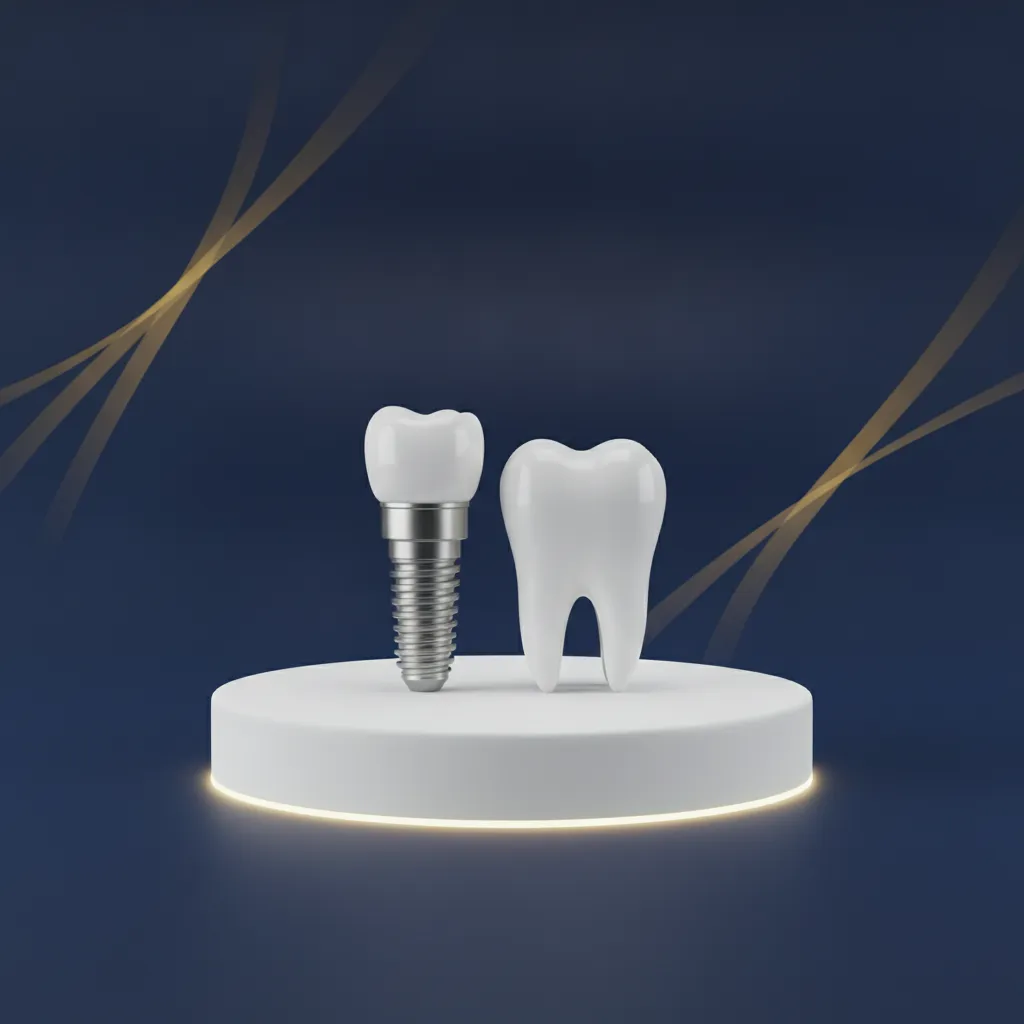
Does Medicare cover dental implants?
Almost never. Original Medicare (Parts A and B) does not cover dental implants — and it does not cover routine dental care generally, including cleanings, fillings, extractions, and dentures. There is one narrow medical exception, but implants specifically almost never qualify under it. If getting dental implants covered matters to you, the realistic paths run through a Medicare Advantage plan with a dental benefit or a separate dental policy, not through Original Medicare.
Why Original Medicare excludes dental implants
Original Medicare was not designed to be dental insurance. It leaves out routine dental work across the board — and dental implants, which are an elective restorative procedure, fall squarely in the excluded category. This is the same gap that catches people off guard on cleanings and dentures; our broader guide on whether Medicare covers dental walks through the full list of what is and is not covered. Implants are simply the most expensive item in that excluded group, which is why the question comes up so often.
For most people, the surprise is not that Medicare skips a cosmetic touch-up — it is that even a medically motivated implant, done to restore the ability to chew properly after tooth loss, still falls outside Original Medicare. The program simply does not have a routine dental benefit to draw from, so the cost of implants, the crowns that go on them, and the associated dental work generally lands on you unless another form of coverage picks it up.
The narrow medical exception — and why implants rarely qualify
Medicare can pay for dental care in limited situations where the dental work is inextricably linked to, and integral to the success of, another Medicare-covered medical service. Examples include an oral exam or treatment before an organ, bone-marrow, or kidney transplant or a heart valve replacement; a tooth extraction to clear infection before certain cancer treatments; and dental exams tied to dialysis for end-stage renal disease. In these cases, your doctor and dentist have to coordinate and document that the dental care is part of the covered medical treatment.
Here is the catch for implants specifically: Medicare has stated that a dental implant or crown is generally not considered immediately necessary to clear an infection before a covered surgery. So even within this narrow exception, implants usually do not qualify. The exception tends to cover something like a necessary extraction, not the elective work to replace the tooth afterward.
This is the same principle that explains why cataract surgery is covered while routine dental is not: Medicare pays for genuinely medical procedures, even ones in the eye or mouth, but not for the elective or restorative work around them.
When dental care is covered, what it costs
In the rare cases where dental care does qualify as part of a covered medical procedure, it is billed under Part B, so you would pay the standard 20% of the Medicare-approved amount after the 2026 Part B deductible of $283. For everything routine — including implants in almost all cases — you would pay the full cost yourself under Original Medicare.
Because the covered situations are so specific and require your medical and dental providers to document how the dental work supports a covered procedure, it is worth confirming coverage in advance rather than assuming a claim will be paid. If you think your situation might qualify, ask your doctor and check Medicare.gov or call 1-800-MEDICARE before the work is done, so you are not left with an unexpected bill.
The realistic paths to help with implants
If dental coverage is a priority, there are two practical routes. First, some Medicare Advantage (Part C) plans include a routine dental benefit as an extra — sometimes covering a share of major work — though what is included, the annual maximums, and any waiting periods vary widely by plan and can change each year. Second, people who stay with Original Medicare sometimes buy a separate stand-alone dental policy with its own rules. Neither guarantees implants specifically, so the details matter enormously. Our local Medicare team serving Monroe can help you read the fine print and compare what a dental benefit would actually pay toward the work you need.
One more honest point: because implants are expensive and often done in stages, even a plan that includes a dental benefit may cover only a portion, and any annual maximum can be reached quickly. That does not make the benefit worthless — a meaningful amount toward the work still helps — but it is important to go in with realistic expectations rather than assuming a dental benefit means implants are fully covered.
Timing helps here too. A dental benefit inside a Medicare Advantage plan can usually be reviewed or changed only during the fall enrollment window, so if implants are on your horizon, it is smart to line up the coverage before you need the work rather than after. Planning a year ahead, when you can compare options during the enrollment window, tends to produce a far better result than scrambling once treatment is already scheduled.
Questions to ask before you count on a dental benefit
- Does the benefit cover major work like implants, or only cleanings and exams? Many plans cover only the basics.
- Is there an annual maximum? A dental allowance can be used up quickly by implant costs.
- Are there waiting periods? Some coverage will not pay for major work right away.
- Is your dentist in the plan’s network? A benefit you cannot use with your dentist is worth little.
What you’d pay in the rare covered case — and in the usual one
For dental implants, the honest cost picture has two very different sides. In the far more common case, Original Medicare pays nothing toward implants, the crowns that go on them, or the routine dental work around them, so you pay the full cost yourself unless separate coverage picks it up. There is no deductible or coinsurance to calculate, because there is no covered benefit to apply.
In the rare case where dental care does qualify as integral to a covered medical procedure, it is billed under Part B, so the standard math applies: after the annual $283 deductible for 2026, you pay 20% of the Medicare-approved amount and Medicare pays 80%. As an illustration of the mechanic only, if the approved amount for the covered dental service were, say, $500, your share would be about $100. But keep the earlier point in mind: Medicare has said an implant or crown generally is not considered immediately necessary before a covered surgery, so even in these narrow situations it is usually the extraction or the qualifying medical dental service that is covered — not the implant that replaces the tooth afterward.
How to check whether your situation qualifies
If you think your dental work might fall under the narrow medical exception, confirm it before the work is done rather than assuming a claim will be paid:
- Ask whether the dental care is tied to a specific covered medical procedure — such as a transplant, heart valve replacement, certain cancer treatment, or dialysis — and whether your doctor considers it integral to that procedure’s success.
- Make sure your physician and dentist coordinate and document the connection. Medicare’s exception depends on that documentation, and both providers generally have to be on the same page.
- Confirm coverage in advance with your providers, and check Medicare.gov or call 1-800-MEDICARE, so you are not left with an unexpected bill for work you assumed would be covered.
Because implants specifically almost never clear that bar, treat a covered implant as the exception to the exception — possible in theory, but rare in practice.
Why the reason behind the care matters so much
Dental implants sit in a family of Medicare questions where the answer depends less on the item and more on why it is being done. It is the same principle that makes cataract surgery a covered medical procedure while routine eye and dental work is not, and the same logic behind whether Medicare covers Ozempic or Wegovy — which turns entirely on the medical reason for the prescription rather than the drug itself. Once you see that Medicare tends to follow the medical purpose of the care, it becomes easier to predict where it will and will not help — and to plan the extra coverage, like a dental benefit, around the gaps it leaves.
How The Jordan Insurance Agency helps
The Jordan Insurance Agency is an independent, full-time, licensed insurance agency in Charlotte, North Carolina, serving clients across the state. Because we are independent, we can compare Medicare Advantage plans that include dental with stand-alone dental options side by side, and tell you honestly what each would — and would not — pay toward implants, rather than steering you to one company. We review your coverage every year at renewal, which matters because dental extras are exactly the kind of benefit that changes from one plan year to the next, and our help costs you nothing extra, since your premium is the same whether you enroll on your own or through our office. If major dental work is on your mind, that is the right time to plan the coverage around it.
- Medicare.gov — Dental services coverage
- CMS.gov — Medicare dental coverage
- Medicare.gov — Medicare costs
Reviewed for clarity and Medicare insurance context: Billy Jordan Jr., President, The Jordan Insurance Agency. Meet our team. Last reviewed September 4, 2026.
Next step: If major dental work is on your mind, plan the coverage around it — explore our Medicare guidance and plan support.

.svg)
.svg)